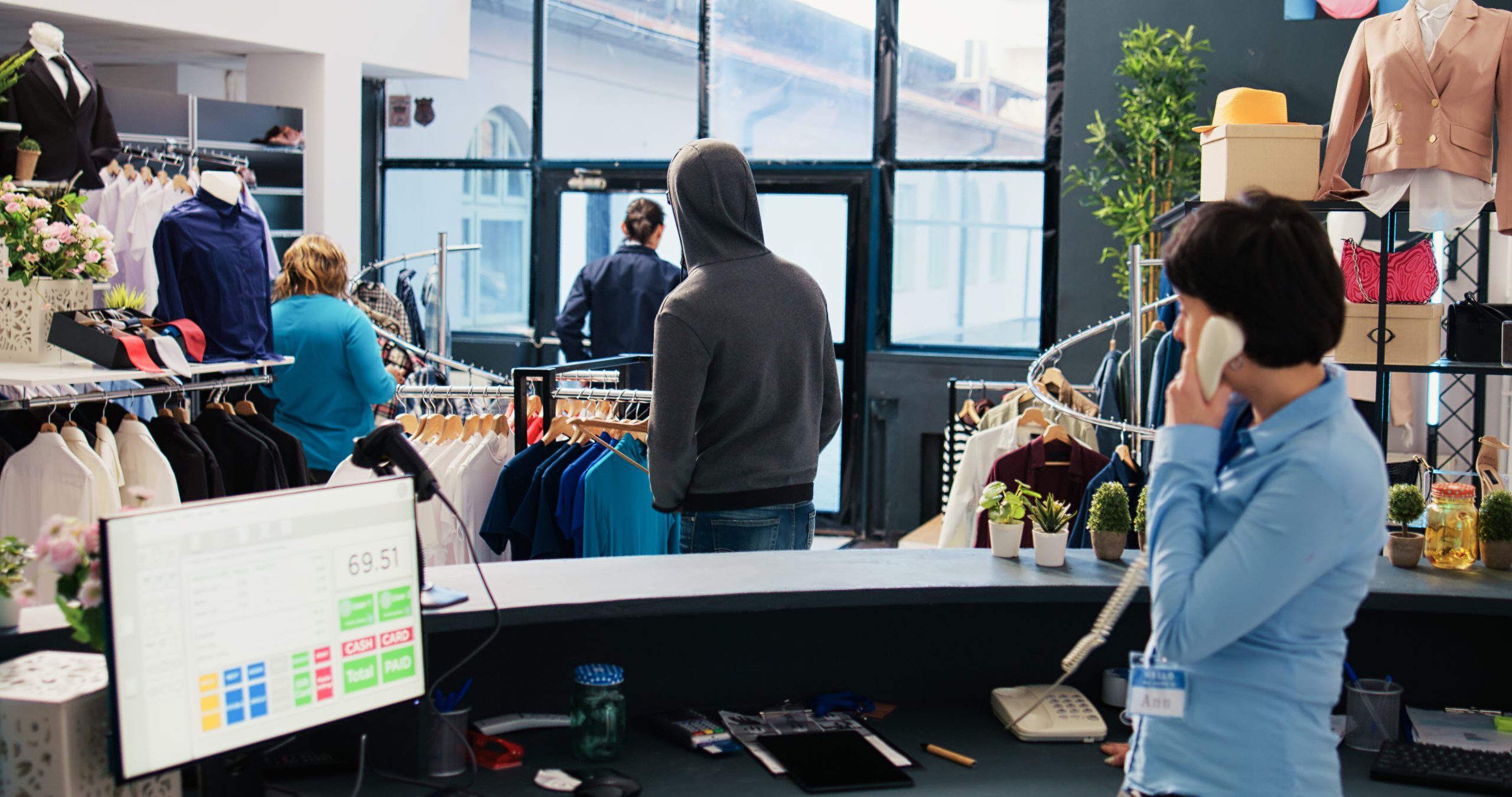
Preventing shoplifting in the retail sector
If you or your employees are inattentive for just a few seconds, the shoplifter has long since made off with the stolen goods. Shoplifting costs retailers over 2 billion euros a year, and this only includes reported cases.
There are various tricks to deter shoplifters and gangs of thieves so that the economic damage to you and your store is kept to a minimum. We will show you how to recognize a shoplifter and what shoplifting prevention measures you can take to prevent shoplifting.

Preventing shoplifting: how to recognize a shoplifter
Most shoplifters are first-time offenders or do not operate professionally in gangs. They have no tricks up their sleeves, can hardly outwit your retail security products and shy away from contact with your employees.
The police crime prevention department explains in a list which characteristics and behaviors indicate a shoplifter:
- posture appears inhibited and unnatural
- hectic spots often appear on the neck and face
- the gaze wanders inconspicuously around
Tipp
Train your employees and make it clear to them what characteristics they need to look out for in order to avoid shoplifting in the future.
Another characteristic of the criminal shoplifter is that shoplifters often appear in groups and gangs and thus circumvent simple anti-theft devices. While one of them distracts the sales clerk, the accomplices grab the goods.
It can also be observed that thieves like to strike during peak times between 3 and 6 p.m. or on festive days and during special promotions – shoplifting usually happens when the store is busy.
Small, expensive goods, such as cosmetics, are particularly popular when it comes to shoplifting in the retail sector:
- Cosmetics
- electrical goods
- razor blades
- perfumes
- jewelry
Products to prevent shoplifting in retail stores
Mirrors
- Spherical inspection mirrors are ideal for mounting on walls and ceilings. They give you a generous view of what is happening in your store.
- By using classic mirrors that are either mounted on the wall or can be moved individually using castors, you can easily give your employees a view into otherwise blind spots.
Fabric security systems
- Textile security devices have a built-in alarm and are ideal for protecting textiles such as jackets and the like from shoplifting in retail stores.
- Linen protectors are the better choice for display units. They allow free trial and error and still protect the goods efficiently.
Alarm systems
- Dummy camera with flashing diode as an effective anti-theft device. Dummy cameras for securing goods can also be very effective in preventing shoplifting – because they are an immediate deterrent.
- Especially when they are fitted with flashing diodes that simulate operation, they are an enormous deterrent.
Preventing shoplifting in retail – important tips
Design your store fittings cleverly
- Tip 1: Thieves feel very uncomfortable and observed in bright and well-lit rooms. Make sure there is sufficient lighting in retail stores to prevent shoplifting.
- Tip 2: Never build shelves too high so that you and your employees can keep an eye on everything and detect shoplifting at an early stage.
- Tip 3: Display empty packaging and only hand out high-priced goods at the checkout.
- Tip 4: Place checkouts on a raised area so that your employees have a better overview.
- Tip 5: Mirror the windows of the store manager’s office that face the sales floor.
Securing goods – label your products correctly
- Tip 1: Make sure you never leave price labeling devices lying around unattended. Otherwise, dubious journeymen will be happy to make their own prices.
- Tip 2: Control mirror for greater clarity
- Tip 3: Avoid using conventional price labels, as these can easily be replaced by counterfeits. If you use them, place them in inaccessible or hidden places. We also recommend using pre-punched labels for price labeling, which tear immediately when thieves try to remove them.
- Tip 4: Provide the labels with a business identification so that the police can easily assign stolen goods found to your shop/branch.
Theft protection: use technology
- Tip 1: Equip your salesrooms with an appropriate video surveillance system. Please note, however, that you will then also need staff to monitor these recordings.
- Tip 2: Join forces with other shopkeepers and communicate with them by e-mail, fax or telephone. If you are warned in good time, you will often recognize shoplifters more quickly and can avoid worse.
- Tip 3: Install mirrors in blind corners and angles of your store to deter thieves. Make sure they are always clearly visible – even to your customers. Dusty and blocked mirrors show that you are not using this surveillance technology.
- Tip 4: Mirrors at self-service checkouts help to prevent theft at the self-service checkout.
- Tip 5: Use electronic article surveillance systems that trigger an alarm in the event of theft and, of course, a corresponding alarm system at the entrance or exit area. Security can often efficiently prevent shoplifting by first-time offenders.

Use of mannequins: Deterrence
- Deterrence is an important point when it comes to preventing shoplifting in the retail sector, so this should not be underestimated under any circumstances.
- Camera systems as well as mannequins can help with this. The presence of surveillance cameras and lifelike mannequins already provides a certain deterrent. Signs indicating that rooms are under surveillance can also increase security.
- It is therefore worth investing here, as the costs can be worthwhile.
Rely on specialists – security & detectives
- Tip 1: The use of mobile or stationary security staff has proven its worth in many stores. Their presence acts as a deterrent to thieves and regularly prevents shoplifting.
- Tip 2: Employ a detective in your store to mingle unobtrusively with your customers and keep an eye out.
Conclusion: theft protection through attention & the right store fittings
You can specifically prevent shoplifting in your store with simple structural measures in the store fittings, such as alarm systems, mannequins or the use of specialist staff. It is often enough to simply implement small anti-theft measures. These include, for example, bright lighting, individual labels, suitable security devices or hanging mirrors and dummy alarms on walls and ceilings. Apart from this, it is particularly important that you teach your employees to be vigilant at all times to prevent shoplifting in retail stores.
FAQ about preventing shoplifting
Which products are stolen most frequently in retail?
- Cosmetics
- Alcoholic beverages
- Clothing and accessories
- Electronic items
It is estimated that retailers lose billions of dollars each year to theft, which can lead to higher prices for honest customers.
How can shoplifting in stores be prevented?
- Use of surveillance cameras and alarm systems to deter theft
- Training staff to recognize suspicious behavior and prevent theft
- Installing anti-theft devices on goods to protect them from theft
- Hiring security personnel to protect the store and customers
How should a sales person react to shoplifting?
- Observing the suspect to ensure that he or she has actually committed a theft
- Notifying security personnel or the police if a theft has been detected
- Removing the suspect from the store and inspecting the merchandise to determine if anything was stolen
- Drawing up a theft report and taking legal action if necessary
How do you recognize a shoplifter?
There are no specific characteristics that all shoplifters exhibit, as they can come in many different shapes and sizes. However, some signs might include someone appearing unusually nervous or anxious, hiding or attempting to hide multiple items, and/or trying to leave the store quickly without buying anything. However, it is important to remember that these signs could also apply to innocent customers and are not evidence of a crime.